
Contact:
11 Mount View
Billericay, Essex CM11 1HB
Alden Rose
ARCHITECTURAL DESIGN

Certified Passive House Consultant
Member of the International Passive House Association
Member of the Passivhaus Trust
enquiries@aldenrose.co.uk
+44 1277 651000
IPHA Membership
ID No. 65104
Copyright 2025 Alden Rose Ltd
Follow Us:



Alden Rose
ARCHITECTURAL DESIGN
Passivhaus: To Certify or Not?
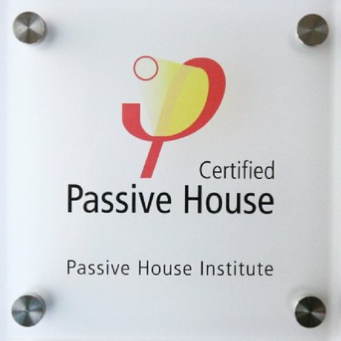
Passive House certification is a quality-
Only if the building meets the defined criteria without exception does it receive the official plaque and certificate from the PHI. This gives clear, third-
The Benefits of Certification
For homeowners:
Guaranteed performance — Certification gives peace of mind that the building really does achieve the promised comfort and energy standards.
Verified energy data — The PHPP model can be used for grant or loan applications, or to demonstrate compliance with energy policies.
Added value — A certified Passive House often carries higher resale and marketing value because it’s independently verified.
Long-
For designers and builders:
Early error detection — A certifier reviews plans before construction starts, reducing the risk of costly mistakes.
Professional recognition — Designers can use a certified project toward their own Certified Passive House Designer status.
Confidence in results — The certification process ensures everyone is working to one clearly defined, measurable standard.
What About the Cost?
Certification fees vary by project size and complexity, but typically fall between £2,000–£5,000 for a single dwelling. That covers the certifier’s time checking documentation, verifying calculations, and liaising with the design team. For many, that’s a worthwhile investment for the assurance and resale value it brings.
Building Without Certification
Many projects — especially self-
This route can still achieve near-
- A Certified Passive House Designer or Consultant prepares the PHPP model and oversees detailing.
- Airtightness testing and commissioning are done to the same rigorous levels.
- High-
performance, certified components (windows, MVHR, etc.) are used. - The team follows best practice on moisture control, thermal bridging, and ventilation balancing.
In short: certification isn’t what makes a Passive House — the design and execution do.
Our Take at Alden Rose
At Alden Rose, we regularly design homes to the Passive House Standard — both certified and non-
Either way, the Passive House methodology — rigorous modelling, continuous insulation, excellent airtightness, and balanced ventilation — remains the foundation of every truly sustainable building.
When it comes to ultra-
Do I really need to certify my Passive House?
The short answer is — no, you don’t have to.
It’s entirely possible to build to the Passive House Standard without pursuing official certification. But as with most things in design and construction, it helps to understand what certification involves, and what you might gain by going through the process.
What Does Certification Actually Mean?

In Summary
Certification = independent quality assurance — ideal for clients who want formal recognition and guaranteed results.
Non-
Either route leads to the same goal: a comfortable, resilient, low-
Alden Rose Ltd
Certified Passive House Designers
Designing low-